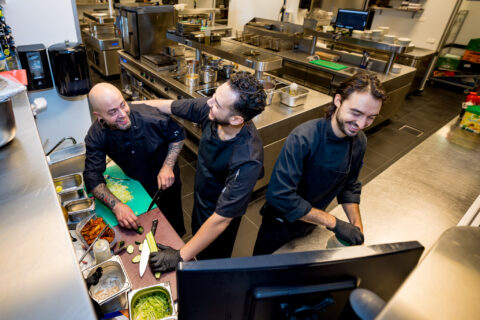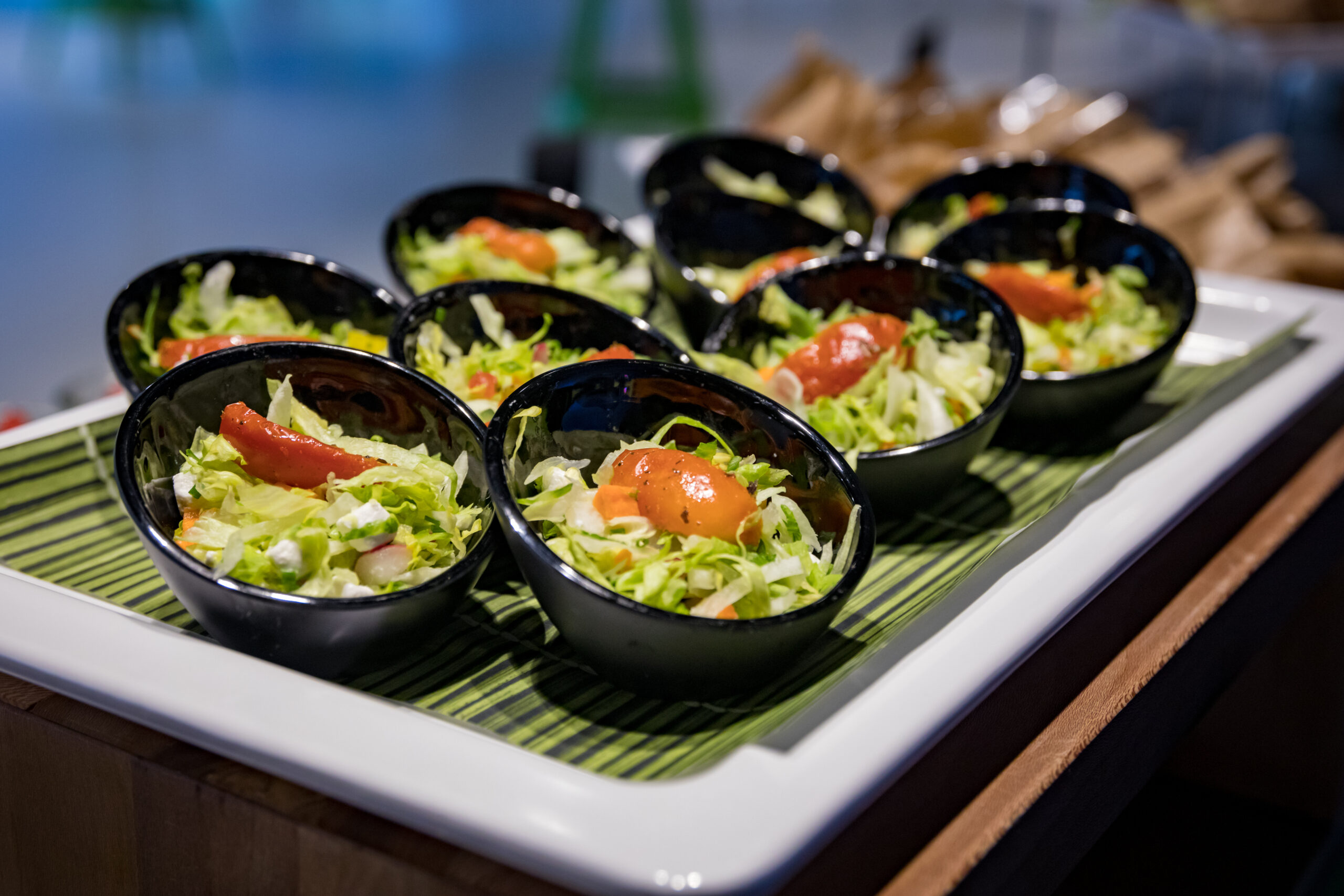

For our catering, we make conscious choices for more quality. Our events are between 50-90% vegetarian and we are building on that. We use seasonal vegetables and work with local suppliers to reduce transport kilometres. We cook to order so we can use fresh produce as efficiently as possible to avoid waste.
In our restaurants, we offer mainly vegetarian dishes. The fish on our menu has an MSC/ASC label and the meat at least two stars Beter Leven. The menus are created by our top chefs. At Pleyn, let yourself be surprised, for example, by a delicious celeriac shoarma, a bitter snack with oyster mushroom balls or beer bread with botanical butter.
We prepare as many dishes as possible on-the-spot and the menus for our various catering operations are coordinated, so that we can use fresh produce as efficiently as possible. This way, we avoid waste. If food is still left over after a day, it is distributed via the app Too Good To Go, for example.
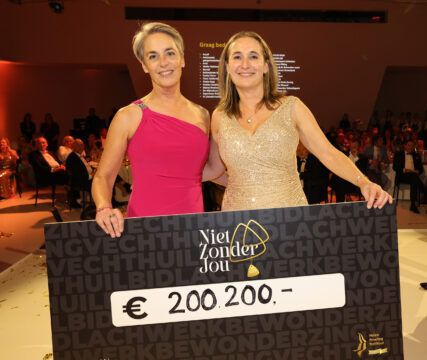
In 2022, Jaarbeurs will win the UFI Sustainable Development Award. We won this award for the way we have designed our menus and how we deal with food waste.
Jeroen van Hooff, CEO Royal Jaarbeurs: "We are continuously taking steps to be the most sustainable organiser and facilitator of exhibitions and events in Europe by 2030. I am incredibly proud that the steps we have taken so far in the field of sustainability and digitalisation are recognised worldwide. And this will certainly not stop here, in the coming period we will announce even more great initiatives."
Food from nearby has fewer transport kilometres and is often in season. Fresh bread and cheese and vegetables come from Utrecht suppliers wherever possible. The wine list is filled with a top selection of European wines. Products that come from further away, such as coffee and oranges, at least have a sustainability label: more value for people and the environment.
No matter how carefully we plan and procure, sometimes food is left over after an event. To map our food waste, we use Winnow, a smart waste bin. Using Winnow, we can measure how much leftover food and GFT waste is thrown away. In 2022, this helped us reduce 0.7 tonnes of food waste, equivalent to 1,640 meals.
Together with Wastewatchers, we are using a new method to prevent food waste. Based on predictive algorithms, we estimate what guests will order at our restaurant Pleyn. Based on this data, we can buy products better, thus reducing food waste.
We can compost the remaining green waste in our own composting machine. With this, we can produce up to 82,800 kg of compost. This compost can be used to grow fruit and vegetables.
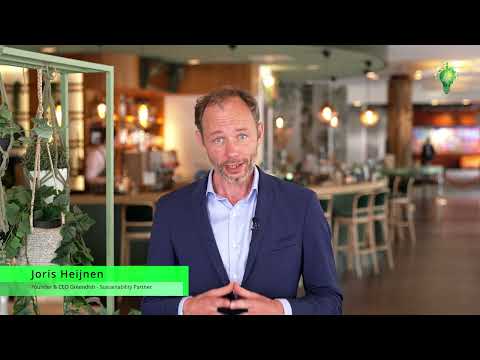
Special and sustainable dining? Together with our partner Greendish, we have designed a future-ready menu. The dinner is composed according to the Greendish 2050 Guidelines. These describe the guidelines for sustainable and healthy menu composition in terms of the arrangement of dishes on the menu, portion sizes and ingredients. The guidelines compiled together based on scientific literature. Dishes include: smoked beetroot tartare with pickled yolk and pan-roasted cauliflower with hazelnut cream and pumpkin.
Before achieving our goal of becoming carbon neutral, we offset our current CO2 emissions by planting trees in collaboration with our partner Trees for all. In 2022, we planted 3,596 trees. In a normal year, this will increase to 8,400 trees, equivalent to 588,000 kg of CO2.
- In our catering business, we choose food packaging made of recyclable materials with the lowest possible carbon footprint.
- With the 'cup-for-cup system' at our dance events, visitors return their used deposit cup when ordering a new drink. In this way, 99% of the cups are now recycled.
- By using a sustainability logo, exhibitors and organisers can easily see whether they are making a sustainable choice at Jaarbeurs.
- Our chef Peter Scholte cooks according to Dutch Cuisine. Read his story.