The layout of your meeting room plays a key role in the success of your meeting. Are you aiming for interaction, focus or knowledge transfer? What is the best meeting layout for your event? At our MeetUp conference centre, we see a number of layouts used regularly. We’re happy to list them for you.
What is the best meeting layout?
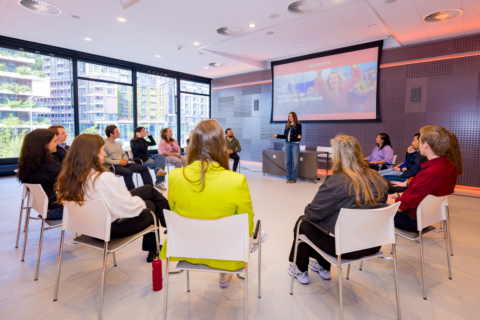
So many different layouts and so many choices. But what is the best meeting layout? There isn’t actually one. Because it always depends on your objective. Are you looking for plenty of interaction between participants and the chair? Then opt for a circular or square layout. A U-shape, cabaret or theatre layout, on the other hand, is ideal if you want the presentation to really shine. And if you simply want to convey information, opt for a classroom layout.
So:
- Lots of interaction? Choose a round or square meeting layout
- Is the presentation the main focus? Opt for a U-shape, cabaret or theatre layout
- Knowledge transfer? A classroom-style layout works best
Tip: First, think about what you want to achieve. Then choose the layout.

Are you organising a meeting? First, consider the purpose of the meeting. You can then choose the layout that best suits this:
The square meeting layout
The square meeting layout is ideal for smaller groups. It is a square or rectangular arrangement, with tables arranged in a square or rectangle, leaving an open space in the centre. This ensures that everyone can see one another and communicate easily. What’s more, there’s no ‘head of the table’, so everyone is on an equal footing. A perfect layout for smaller groups!
Ideal for:
- Meetings
- Decision-making
- Strategic sessions
The U-shaped meeting layout
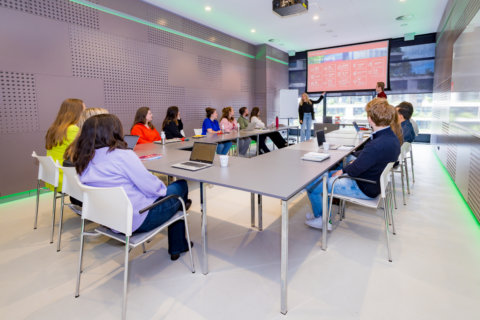
In the U-shaped meeting layout, the tables are arranged in a U-shape, with an open side at the front of the room. This open side is often used for a speaker, presentation or screen. This allows participants to face both the front and each other, offering a good balance between listening and interaction. If you ask us, it’s an accessible layout that keeps all your participants engaged.
Ideal for:
- Presentations
- Training
- Workshops

The cabaret layout
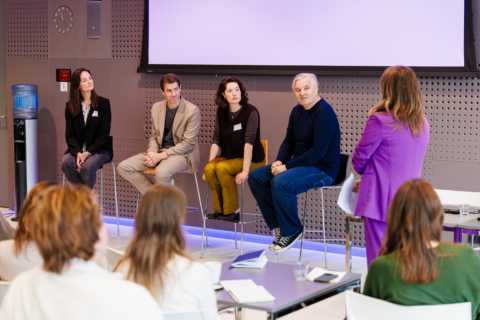
A meeting layout with a cosy-sounding name. And with good reason, as it’s the layout you often see in comedy clubs. You can recognise the cabaret-style meeting layout by the round tables where participants sit on one side, all facing forwards. This allows everyone to see the speaker or presentation clearly, whilst still sitting together in small groups. It feels a bit more relaxed and informal than, say, a classroom layout. And yet the focus remains on what’s happening at the front of the room.
Ideal for:
- Presentations
- Larger groups
- Events
- Workshops
The classroom layout
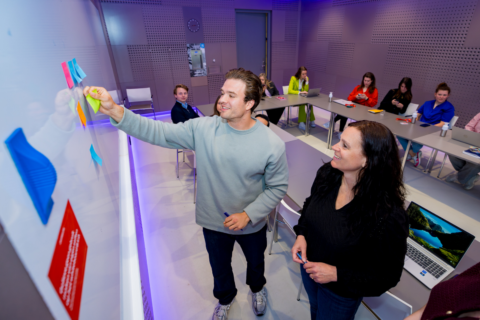
The classroom layout is also sometimes referred to as the ‘classroom-style’ layout. The meeting is arranged just like a classroom, with rows of tables lined up one behind the other. This ensures that participants’ full attention remains on the speaker, whilst allowing them to take notes easily. Although this does come at the expense of interaction, the focus is greater in this setup.
Ideal for:
- Training
- Lectures
- Knowledge sessions

The round-table meeting layout
In a round meeting layout, everyone sits at a single round table. This creates an equal setting: there is no clear ‘head’ of the table. And everyone can see each other clearly. It creates a pleasant and informal atmosphere, in which conversations flow naturally and everyone finds it easier to join in.
Ideal for:
- Small meetings
- Brainstorming sessions
- Team sessions
The theatre-style layout
The theatre-style layout consists of rows of chairs without tables. Just like in a theatre. This layout allows you to accommodate a large number of people in a single room, and ensures that all attention is focused on the speaker or presentation. As there are no tables, this layout is less suitable for interaction and active participation. However, it is ideal if the main purpose of the meeting is primarily to listen.
Ideal for:
- Presentations
- Keynotes
- Large gatherings

The boardroom layout
The boardroom layout is the classic meeting format, featuring a long table (often oval) with chairs arranged around it. You often see this in boardrooms or at formal meetings. The setting is clear and direct: everyone sits close together and the discussion is usually to the point. What’s more, all participants can see each other, which also encourages interaction.
Ideal for:
- Decision-making
- Executive meetings
- Small groups
The arena layout
In an arena layout, the speaker is literally at the centre of attention. The stage is situated in the middle of the room, with chairs arranged in a circle around it. A bit like in a stadium. This creates an energetic and intimate atmosphere, as the audience effectively surrounds the subject. Everyone is seated close to one another and to the speaker. What’s more, this makes people feel more involved in what’s happening.
Ideal for:
- Inspiration sessions
- Debates
- Interactive meetings

The right layout in the right room
You should choose the venue based on your objective and the required layout. It’s important to follow this order, as not every venue is suitable for every layout. The size of the venue, the number of participants and the technical requirements all play a part.
At Jaarbeurs MeetUp, you can choose from a range of meeting layouts, which we can tailor to suit your event. Would you like to run an interactive session, or perhaps give a presentation to a large group? We’ll set up the room exactly as you need it. That way, you can be sure that your meeting layout not only looks good, but actually works.